
Dry Ice Blasting vs Sandblasting vs Water Blasting vs Laser Cleaning
Cleaning methods should be compared through the contaminant, substrate, residue pathway, and representative site trials—not by equipment name alone.
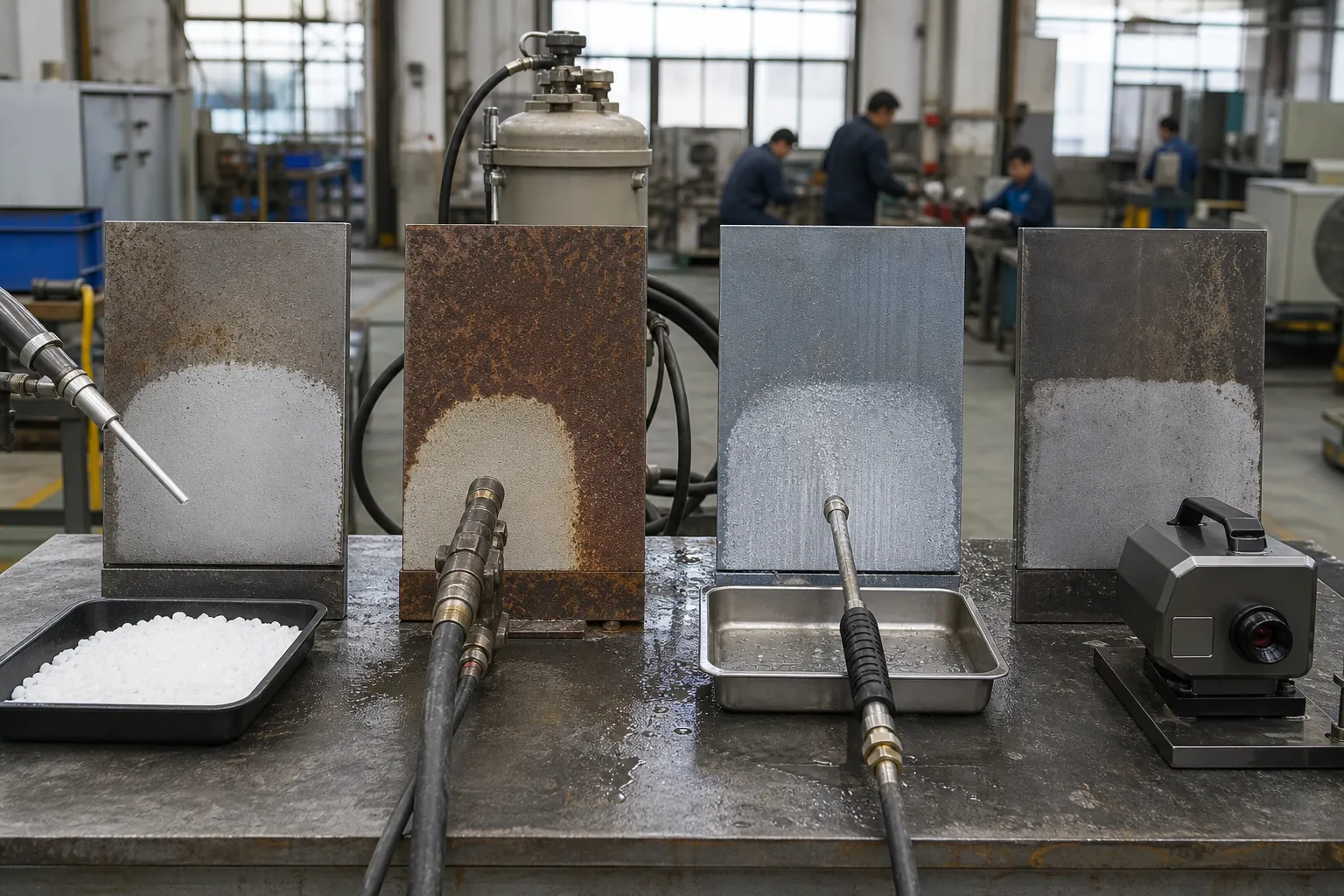
1. Classify the Contaminant and Substrate First
Oil, carbon deposits, release agents, coatings, rust, dust, and biological residues rely on different removal mechanisms. Metals, plastics, composites, electronic components, and food-processing equipment also tolerate different surface effects. Cleaning-method selection should begin with three questions—what must be removed, what damage is permissible, and how the removed residue will be collected—rather than simply comparing equipment names.
In real projects, this point should be confirmed before an enquiry, trial, or production scheduling, rather than adjusted at the last minute after the product arrives. Recording the key information in an internal requirements sheet allows purchasing, operations, and logistics teams to communicate against the same conditions. For this topic, it is also advisable to record the current practice, the metrics to be improved, and unacceptable risks, so that later comparisons are based on more than subjective impressions.
2. Characteristics and Boundaries of Dry Ice Blasting
Dry ice blasting uses the impact of high-speed dry ice pellets, thermal stress, and sublimation to help separate contaminants. Because the cleaning medium sublimates without leaving abrasive grit or large amounts of water, it is suitable where secondary media residue should be reduced. The dislodged oil, coating, or particles must still be collected and disposed of, however, and not every heavy rust layer or strongly bonded coating is suitable for dry ice blasting alone.
Turn this judgement into actionable checks: who is responsible for confirmation, when it must be confirmed, and who must be notified if conditions change. Once the process is clear, many losses and delays that appear to be product problems can be prevented. Where several departments are involved, assign equipment, packaging, receiving, and on-site operating responsibilities separately instead of leaving the information in verbal discussions.
3. Tasks Suited to Sandblasting
Sandblasting relies on the mechanical cutting action of abrasive media and often has an advantage on rust layers, old coatings, or tasks requiring aggressive surface treatment. Correspondingly, it creates spent abrasive and dust and may change surface roughness. Extra caution is required with precision components, sealed structures, food areas, or sites where abrasive recovery is difficult.
For business users, the most useful outcome is not an abstract conclusion, but a solution they can verify against their own equipment, packaging, route, and operating environment. Where necessary, validate it through a small-scale trial or historical records before using the result for bulk purchasing. Trials should use representative cargo, contaminants, environments, or transit durations wherever possible, while retaining basic data such as photographs, temperature, quantity used, or operating time.
4. Advantages and Limitations of Water Blasting
Water blasting can address some heavy contamination and large-area work while reducing certain dust problems. It also creates requirements for wastewater, drainage, drying, and potential corrosion control. Electrical equipment, sensitive electronics, and production areas where water is unsuitable require a specific risk assessment. Whether the equipment can be shut down and whether drainage is available can matter more than cleaning capability itself.
Conditions can change between batches or seasons. Please retain receiving and usage records so you can review product condition and usage feedback with us. Ongoing review helps the team distinguish the effects of product form, packaging, transport waiting time, and on-site handling. When results vary significantly, identify what conditions changed before adjusting procurement or process parameters, rather than immediately attributing the issue to the product itself.
5. Assessing Laser Cleaning Applications
Laser cleaning is selective and non-contact, making it suitable for some precise surface treatments and localised work. Equipment investment, operating speed, laser safety management, fume extraction, and operator training must all be included in the evaluation. For large areas, complex geometries, or mobile on-site work, compare actual efficiency rather than considering only how advanced the technology appears.
If the application involves sensitive cargo, regulated areas, or densely occupied locations, connect this point with the site’s safety, quality, or hygiene procedures. A technical choice can only deliver stable results when it is embedded in actual procedures. The project owner should also confirm that operators understand the boundaries, such as where work is permitted, which materials must be isolated, and which abnormalities require work to stop and be reported.
6. Replace Assumptions with an On-Site Trial
The most reliable selection method is a small-scale trial on representative contamination and substrate. Record cleaning results, surface changes, operating time, shutdown requirements, secondary waste, and safety controls. Comparing all four methods against the same evaluation criteria is the only way to determine which delivers a lower total cost at your site.
If you are comparing blasting with other methods, describe the contaminant, substrate, acceptable surface changes and equipment conditions. We can discuss pellet supply; process selection should still rely on representative trials.
7. Do Not Replace Site Judgement with a Single Experience
A common mistake is interpreting “no secondary blasting medium” as “no waste.” After dry ice blasting, the removed contamination may still need to be collected and handled according to site environmental and safety requirements. Other methods likewise require a plan for dust, wastewater, or spent abrasive.
For dry ice projects, the product, packaging, transport, and operation all interact. Recheck key conditions for a first engagement, route change, equipment replacement, or seasonal change instead of copying past quantities, forms, or process parameters. Turning experience into a checkable process is how consistency is maintained across personnel and projects.
8. Arrange Supply After Selecting a Cleaning Method
Based on your contaminant type, substrate, cleaning area, shutdown window, and equipment conditions, we can discuss a suitable dry ice pellet form and supply schedule. When choosing a cleaning method, we recommend validation on an actual sample or in a small-scale trial rather than substituting a single promotional claim for site judgement.
After a blasting trial, record pellet consumption, operating time and delivered condition for later purchasing. We will review packaging and supply frequency against your schedule; media supply is not a guarantee of cleaning results.
9. Turn Selection Principles into a Routine Process
For “Dry Ice Blasting vs Sandblasting vs Water Blasting vs Laser Cleaning,” companies can turn the key judgements in this article into a routine process: collect application and timing information when a requirement is raised, confirm product form and packaging before purchasing, record condition on arrival, and review the actual result after use. The purpose is not to add forms, but to leave reusable evidence from every purchase, cleaning job, or shipment. For recurring operations, a concise process can reduce uncertainty caused by personnel changes, last-minute communication, and differences in individual experience.
When operating conditions change—for example, when equipment is replaced, container design or routes change, hot weather begins, or usage frequency increases—the existing rules should be revalidated. Companies can first test the new arrangement with a small batch or representative task, then revise order quantities, packaging, and operating arrangements from the results. Connecting validation, records, and improvement is what turns dry ice from a single consumable into a supply-chain and process resource that can be managed consistently.
Conclusion
The key to “Dry Ice Blasting vs Sandblasting vs Water Blasting vs Laser Cleaning” is not finding a universal answer, but evaluating product characteristics, the actual application, packaging and transport, and on-site operation within one decision framework. For companies that use dry ice over the long term, we recommend defining requirements first, then validating them on a small scale, and finally establishing stable purchasing and use standards. This can improve the result while making cost, quality, and safety management more controllable.
Once you have selected dry ice blasting, send us the validated equipment requirements and expected consumption. We will confirm available pellet specifications and delivery conditions for your purchasing plan.
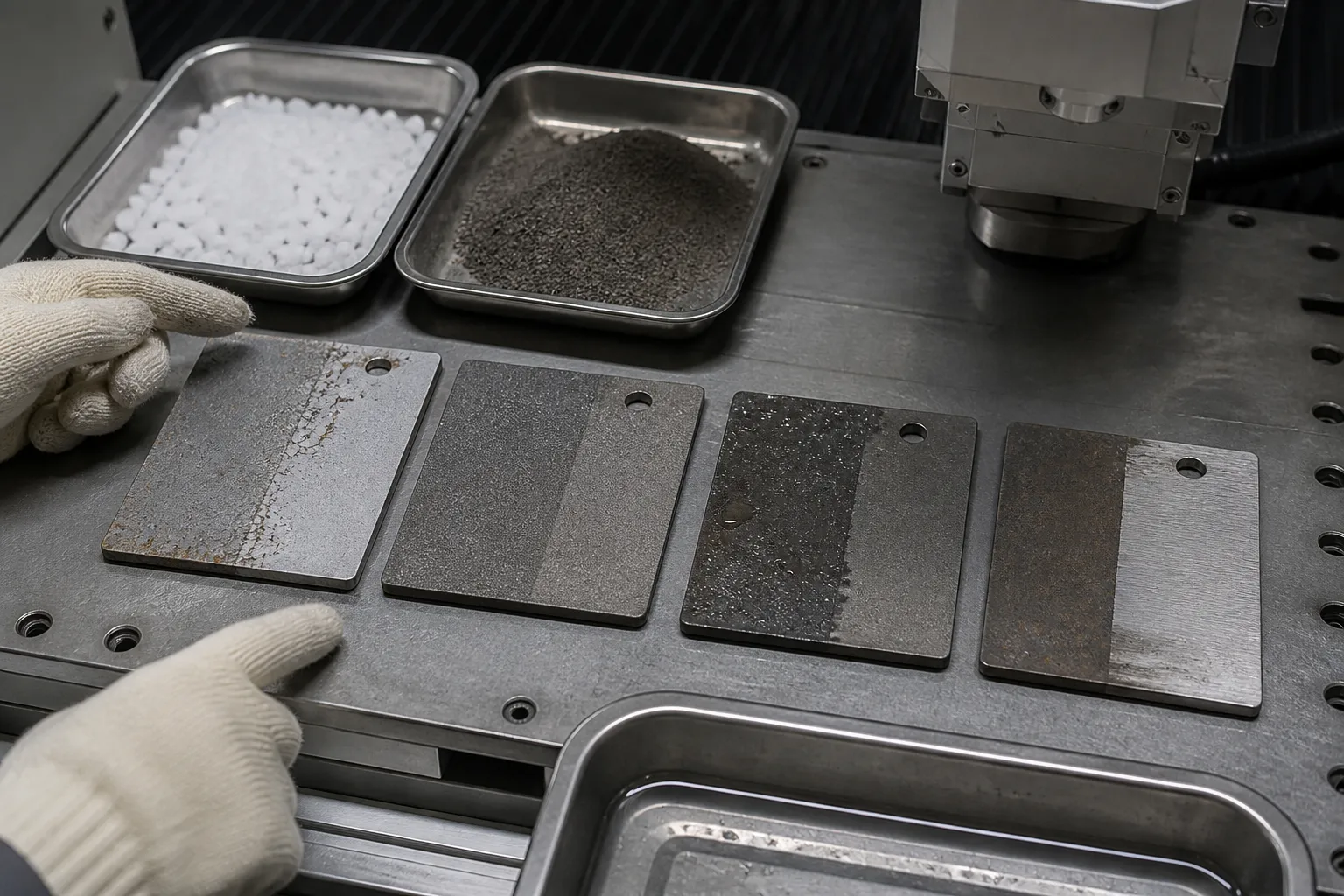
Continue your dry ice research
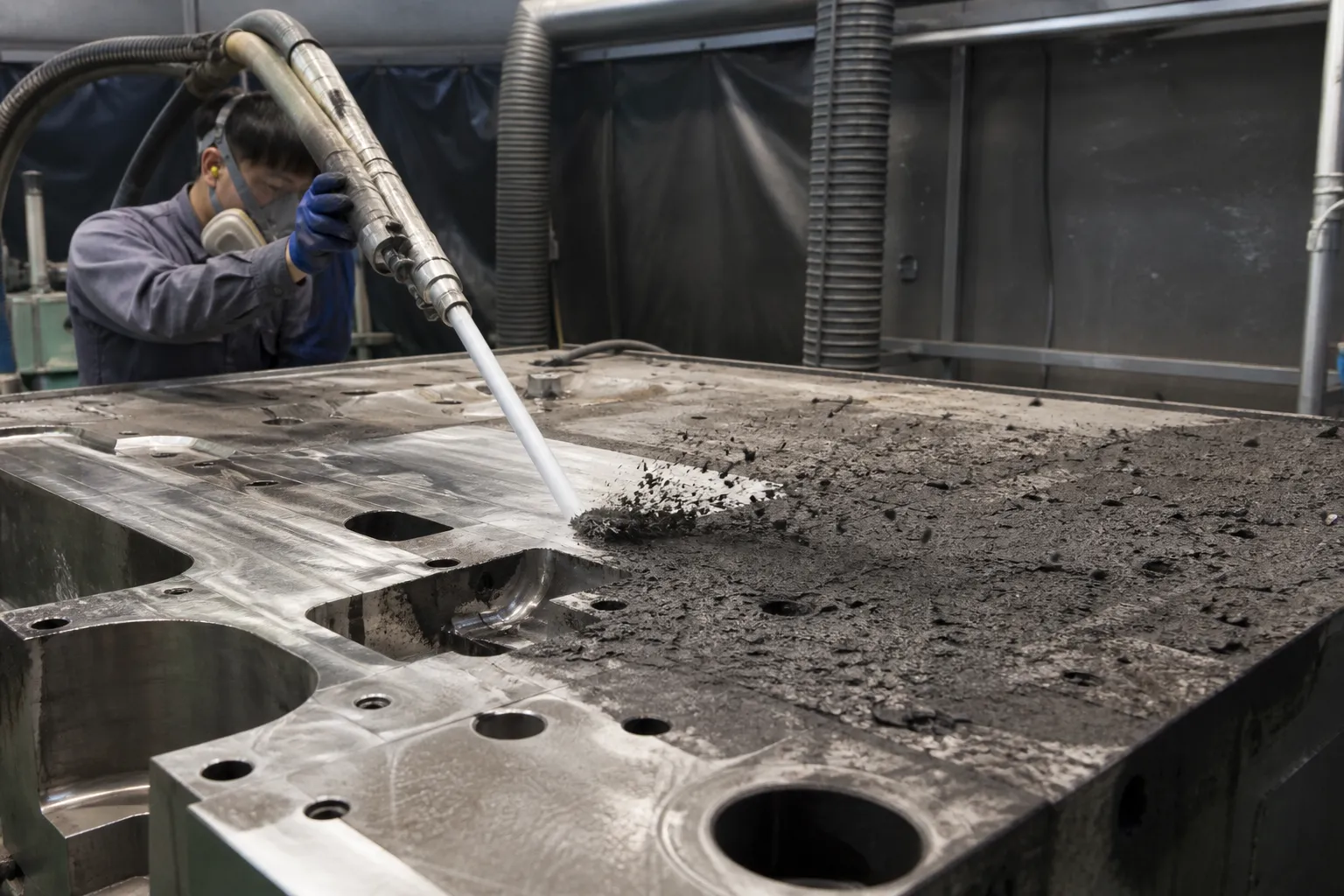
What Is Dry Ice Blasting and How Does It Work?
Dry ice blasting combines pellet impact, temperature differential, and sublimation; actual suitability still depends on the contaminant, substrate, equipment, and site controls.
Read guide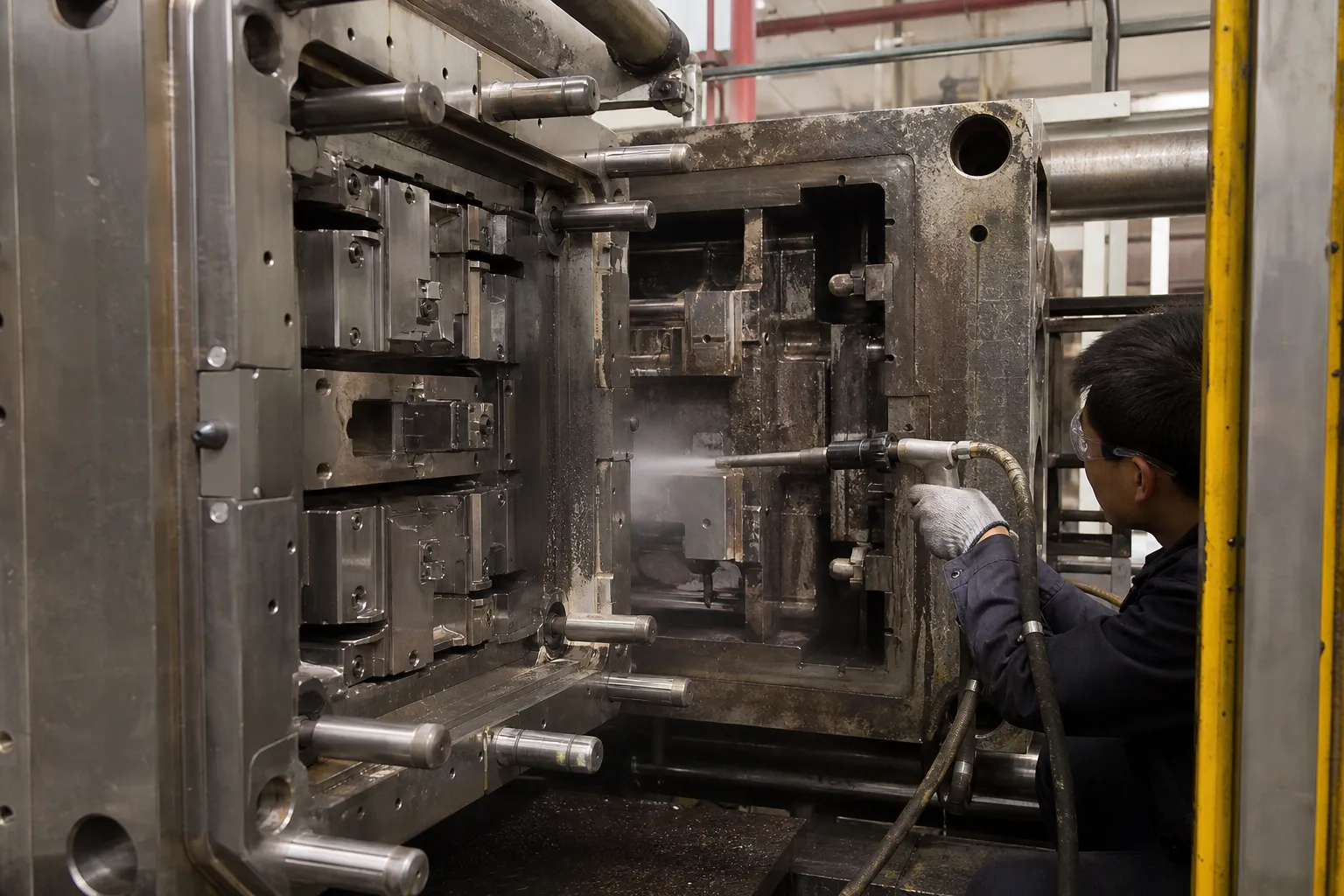
Dry Ice Cleaning Applications: Molds, Electronics, Food Plants and Industrial Equipment
Each industrial cleaning scenario needs a separate review of the contaminant, substrate, accessibility, site risks, pellets, and equipment parameters.
Read guide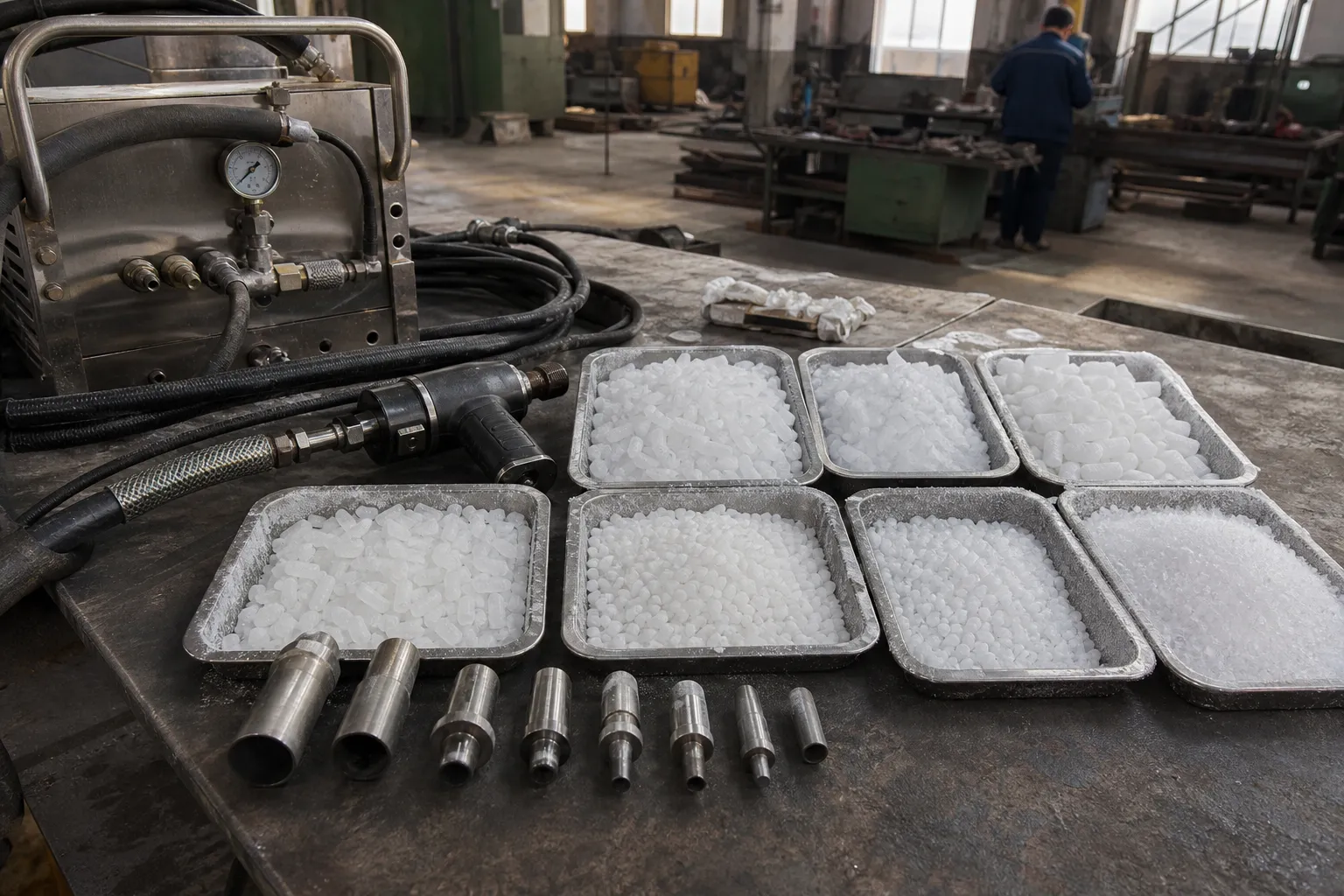
How to Choose the Right Dry Ice Pellet Size for Your Application
Pellet specifications affect feeding, blasting, contact area, and packaging turnover, so selection should use equipment, application, site handling, and trial data.
Read guide