
Dry Ice Pellets for Industrial Cleaning
Dry ice pellets serve as blasting media. Machine and nozzle requirements, the cleaning target and operating schedule determine the size, estimated consumption and replenishment needs; site safety controls remain essential.
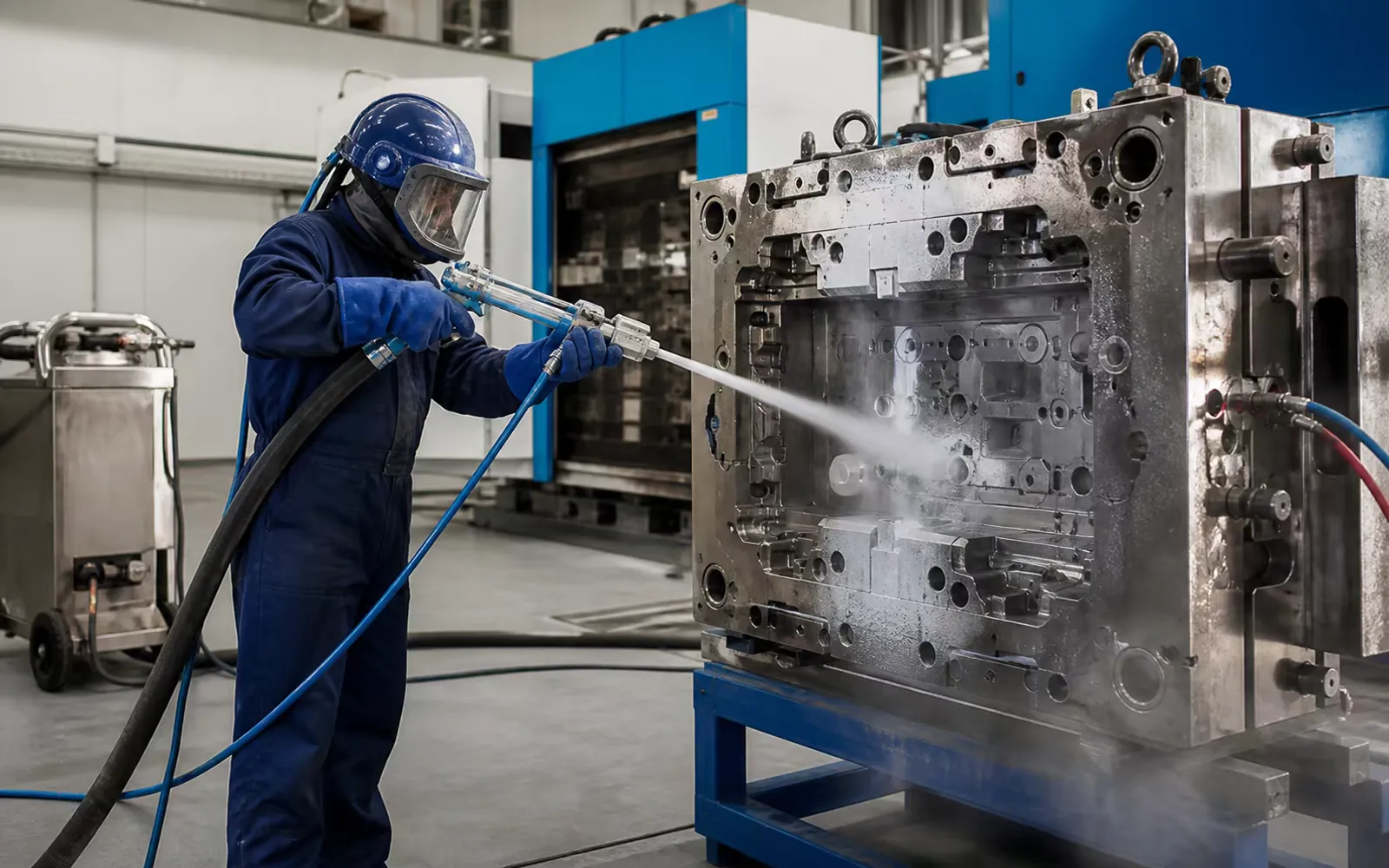
Dry ice blasting combines particle impact, local thermal stress and rapid sublimation to remove some contaminants with little added water or solvent. It is a process that must be tested for the substrate, contamination and site conditions—not a one-button replacement for every cleaning method.
How dry ice blasting works
A blasting system accelerates dry-ice particles with compressed air toward the surface. Impact transfers energy, the sharp temperature difference can weaken the bond between residue and substrate, and sublimation expands the particles into gas. The combined effect can lift certain deposits from the surface.
The result depends on the contaminant, substrate, geometry, air supply and operating parameters. It is not simply freezing dirt away or blowing it off with gas. Parameters have to be adjusted for each job so cleaning is sufficient without placing vulnerable surfaces at unnecessary impact or thermal risk.
Where it can be considered
In plastics and rubber production, dry ice blasting can be considered for resin, carbon build-up and release-agent residue on moulds, cavities, vents and equipment surfaces. Automotive and component manufacturing may use it on fixtures, engine components, tooling, adhesive residue and production-line oil contamination.
Some electrical equipment and food-processing equipment may also be candidates where water is unsuitable, but only after shutdown, isolation, electrical safety assessment and site hygiene requirements are addressed. Suitability is determined by the residue, base material, equipment geometry, personnel safety and required post-clean condition—not the industry name alone.
Operational advantages and what remains afterward
Because the blasting media sublimates, the process usually avoids wash water and large volumes of solvent waste. Some equipment can be cleaned with less disassembly, which may shorten a maintenance window. With appropriate settings, dry ice is non-conductive and non-abrasive to certain metal, plastic and coated surfaces.
Removed contaminants do not disappear. Oils, resins, dust, lead-containing debris or biological residues still require collection and disposal according to their properties. Noise, airborne debris and carbon dioxide are also process hazards, so enclosed spaces and uncontrolled work areas are unsuitable.
Prepare the job and establish parameters
Before work, confirm shutdown, isolation, depressurisation and any required lockout/tagout. Review high temperature, moving equipment, electrical and flammable-material hazards. Identify the substrate, coating and deposit, then perform a small test patch to check for colour change, cracking, deformation, delamination or effects on nearby seals, sensors and cables.
Parameters include air pressure, particle size, nozzle bore, angle, standoff distance and traverse speed. Hard carbon on a metal part is not treated like oil on a soft plastic. Keep the gun moving and plan for rebound, ejected contamination and post-clean visual access in deep holes, gaps and complex cavities.
Recognise the limits
Hard oxide scale, heavy rust, deeply sintered deposits or surfaces that need roughening may require abrasive blasting, laser, brushing or chemical methods. Dry ice does not provide continuous dissolving action, and sticky, permeating or reactive residues can require wiping, absorbents or a second process.
It also does not automatically disinfect or sterilise. Food, medical and clean-production environments still need their own validated hygiene checks. Equipment investment, compressed-air demand, dry-ice availability, noise control and confined-space risk should all be considered before adoption.
Protect people and verify the clean result
Typical protection includes insulated gloves, goggles or a face shield, hearing protection, long-sleeve workwear and suitable respiratory protection. Provide ventilation and a controlled exclusion zone, and keep uninvolved people out of the spray path.
After cleaning, confirm the dry ice has sublimated and inspect for loosened material, remaining dust and accumulated contamination. Vacuuming, wiping, disinfection, functional checks or trial running may still be required. A record of before-condition, parameters, after photos, key inspections and recommissioning creates a useful quality loop.
Assess return on investment by the whole job
Compare more than consumable cost: include downtime, dismantling labour, solvent purchase, waste treatment, equipment life and time to return to service. For moulds, fixtures and critical equipment, track maintenance interval, cleaning time, rework rate and surface-defect changes before and after adoption.
Before scaling, keep an alternative method as a comparison and build a parameter library for representative residues. Record the material, coating, deposit thickness, nozzle, distance, movement, ventilation and post-clean acceptance standard so different operators can obtain consistent results.
Conclusion
Dry ice blasting can reduce water and solvent use while supporting shorter maintenance windows for suitable applications. Small-area trials, substrate assessment, parameter validation, ventilation and documented acceptance are what make the method a controlled industrial process.
Discuss Dry Ice for Your Application
Send us the operating conditions, quantity, delivery location and required date. We will review the available product and supply options with you.