
Dry Ice Supply for Cold-chain Logistics
Blocks and pellets support cold-chain pack-outs and replenishment. Route, transit time, insulation and handover points guide quantity and delivery planning, including an allowance for delays.
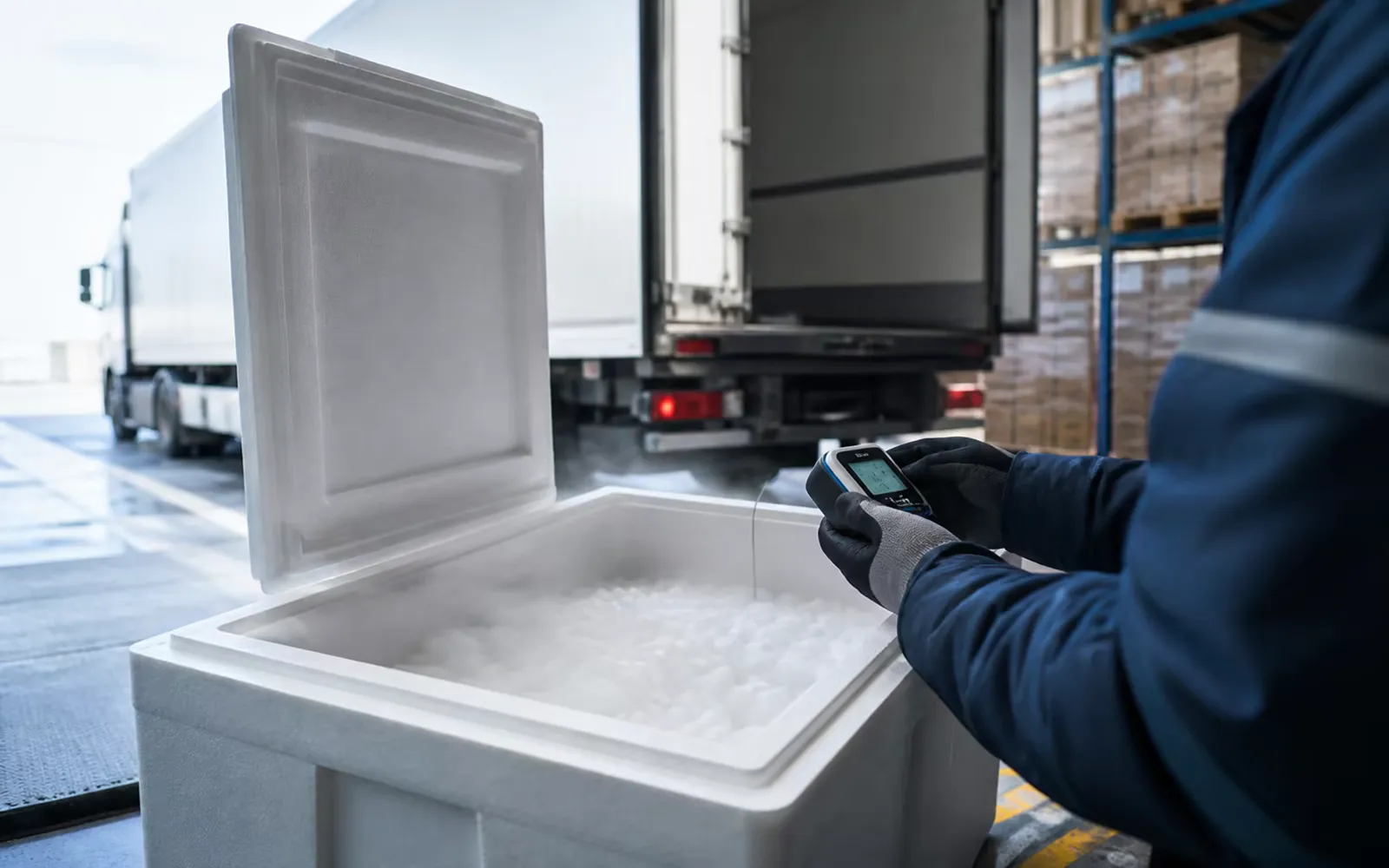
Dry ice does more than freeze a shipment. As it sublimates, it absorbs heat and creates a low-temperature, low-moisture environment inside the pack-out. A dependable cold-chain design treats dry ice quantity, insulation, route duration, ventilation and handover monitoring as one system.
Why dry ice works in cold-chain logistics
Dry ice is solid carbon dioxide. At normal pressure it sublimates instead of melting into water, at about −78.5°C. This helps keep a pack cold without the pooled water that can damage cartons, labels or goods. It can be useful where replenishing a cold source en route is difficult, provided the insulation and pack-out have been verified.
Its low temperature is not right for every product. Before calculating quantity, define the product’s permitted temperature range and its transport upper and lower limits. Direct exposure can cause freezing damage, brittleness, structural change or packaging failure.
Build the pack-out as a complete system
A typical dry-ice shipper combines a protective outer carton, insulation, an inner pack that separates the product from the refrigerant, dry ice placement and a temperature recorder. Add partitions and cushioning where products are sensitive to cold, pressure or vibration.
Distribute dry ice as evenly as practical so one side of the shipper does not become much colder than another. Larger packs may use bottom, side and top zones. The container must retain a safe gas-release path: dry ice must never be placed in a fully sealed package without pressure relief.
Estimate dry ice from evidence, not cargo weight alone
Consumption depends on insulation performance, product starting temperature, shipment duration, ambient temperature, opening frequency and carrier conditions. Historical route data or packaging tests are a stronger starting point than a fixed ratio based only on product weight.
Run representative box tests with the intended product, dry ice quantity and final packaging. Record internal temperature and remaining dry ice under normal, hot-weather and delay scenarios. Turn the results into a pack-out instruction that states the box type, dry ice weight, placement, qualified duration and recovery action.
Monitor temperature and handovers throughout the route
Pre-cool or pre-freeze the goods before packing; otherwise dry ice is consumed first in pulling down the product temperature. Use a calibrated temperature logger and, where appropriate, keep pack-out photos, handover records and exception notes. These records are especially useful for high-value goods, research samples and cross-border shipments.
At each logistics stage, confirm continuity of the cold source, package integrity, clear marking and carrier awareness that dry ice is present. If a shipper is damaged, dry ice is exhausted or temperature goes out of range, isolate the goods and assess them against the product’s validation plan rather than judging only by appearance.
Protect people and meet carrier requirements
The main operational hazards are cold burns and carbon-dioxide accumulation. Use insulated gloves and eye or face protection when packing, replenishing or unpacking. Store and handle dry ice in a well-ventilated area, never in a standard refrigerator, sealed vehicle, enclosed cabinet or unvented container.
Cross-border and air transport may require dangerous-goods declarations, net dry-ice weight marking and carrier-specific package labels. Confirm the latest carrier and regulatory requirements before dispatch, and train warehouse, packing and customer-service teams on storage, handover and exception handling.
Improve the process before adding more dry ice
Cold-chain failures often come from warm product at packing, uneven placement, unsuitable sealing, optimistic transit estimates or an unattended final delivery. Adding more dry ice is not always the answer: it raises weight, cost and safety exposure and may over-cool part of the shipment.
For longer, higher-value or multi-region routes, use packaging validation together with data monitoring. Seasonal pack-out parameters, temperature records and exception labels create a feedback loop that steadily improves the design for the product, route and carrier actually used.
Create a repeatable cold-chain programme
Start with high-frequency products and fixed routes. Record pack-out time, dry ice mass, duration, temperature curve and delivery status for each shipper. After several shipments, group recurring delays, damage, temperature changes and customer feedback, then revise packaging and dispatch timing from the evidence.
Total cost includes more than dry ice: include insulation, data loggers, packing labour, reships, product loss and returns. The final solution should balance temperature control, delivery, compliance and customer experience instead of optimising a single purchase price.
Conclusion
The value of dry ice in logistics is a controlled window of low temperature without meltwater. When product temperature, package structure, validated quantity, route monitoring and worker safety are managed together, it becomes a reliable cold-chain tool rather than an emergency cooling material.
Discuss Dry Ice for Your Application
Send us the operating conditions, quantity, delivery location and required date. We will review the available product and supply options with you.