
Dry Ice for Seafood and Food Cold Chains
Dry ice blocks and pellets for food and seafood shipments, with form and quantity selected around the cargo temperature range, packaging and transit time. Share these details to discuss delivery requirements.
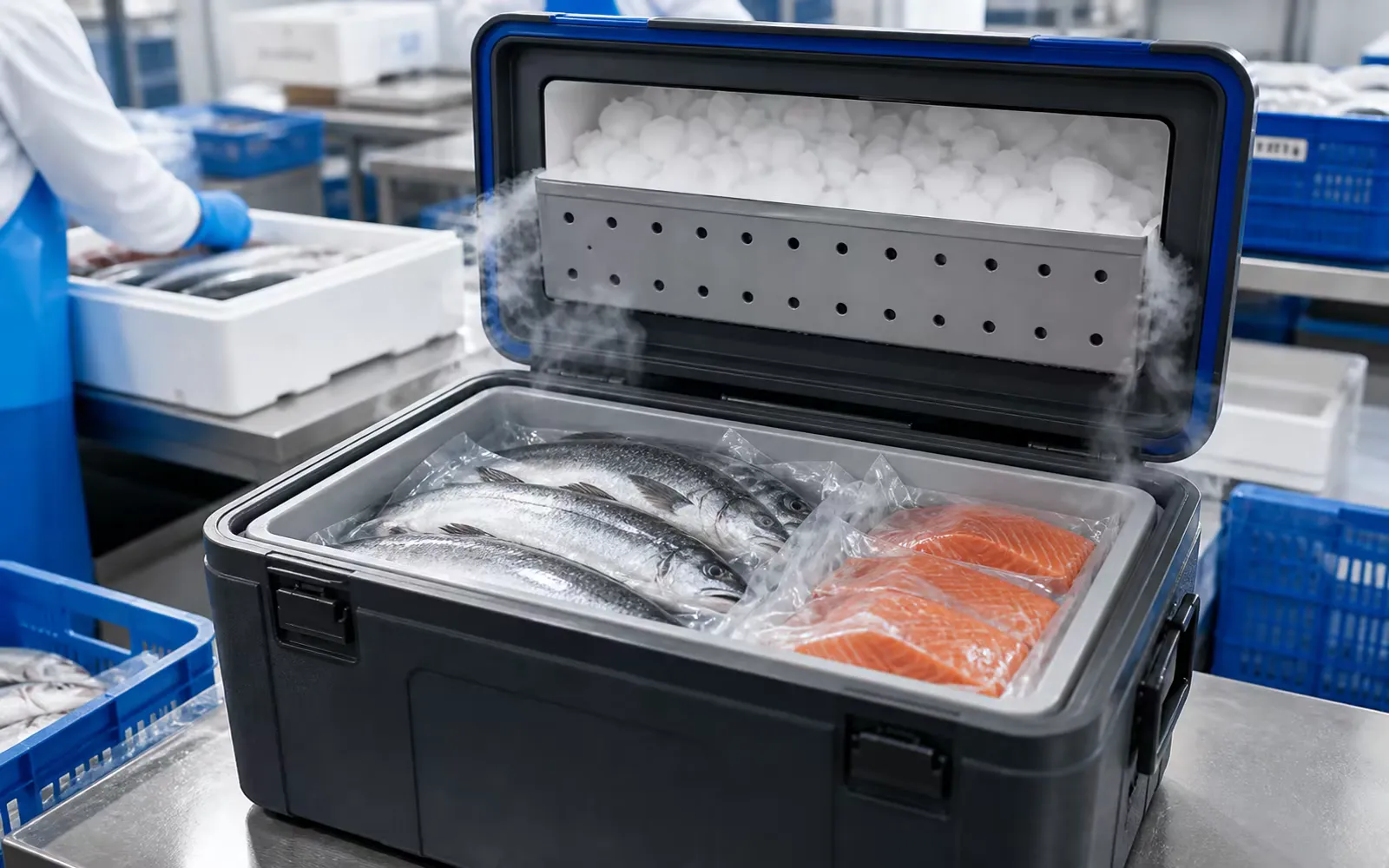
Seafood and food transport has to protect temperature, appearance, texture, juices and package hygiene at the same time. Dry ice can reduce meltwater inside a shipper, but it is not a universal freshness solution: the product type, starting condition and route determine whether and how it should be used.
Why food and seafood shippers use dry ice
Higher temperatures accelerate microbial growth, fat oxidation, protein change, moisture loss and softening. Dry ice absorbs heat as it sublimates and does not leave ordinary ice melt behind. For fish fillets, shrimp, shellfish and frozen prepared foods, a drier shipper can help keep cartons and labels intact and reduce contact with contaminated meltwater.
Not all food benefits from very low temperatures. Fresh-cut products, some fruit and vegetables, chilled ready-to-eat products and freeze-sensitive foods can suffer local freezing or texture change. First confirm whether the product is chilled or frozen and what temperature range it can accept. Live seafood also needs its own oxygen, humidity, ventilation and water-quality plan.
Match the method to the food format
For already frozen fish, shrimp, meat, frozen dough and ice cream, dry ice is mainly used to maintain temperature and limit warming during transit. Pre-cool the product, place dry ice around and above it as appropriate, and use separators to avoid direct contact. Chilled, short-life products should use dry ice only after a validated pack-out confirms that local freezing will not occur.
Packaging needs also vary by product. Whole fish and crab need compression protection and drainage management, while fillets, sashimi and small seafood packs need stable temperature and strong protection against puncture. Keep vacuum packs, absorbent pads, liners and dividers separate from dry ice; do not use frozen-food pack-out methods for live products.
Get the food pack-out details right
Food shipments commonly use a pressure-resistant outer carton, insulated liner, leak-resistant inner bag, product dividers and a dry-ice layer. The insulation must allow carbon dioxide to vent safely. Do not pack dry ice in fully sealed plastic buckets, glass containers or metal cans, and choose tape that remains dependable in low temperatures.
Check product core temperature and package integrity before packing. Record dry-ice weight, packing time and expected arrival. Dry ice does not replace food-grade inner packaging, and it must not be left in prolonged direct contact with exposed food or used to conceal a product that has already lost temperature control.
Control duration and refrigerant quantity
Ambient conditions, insulation thickness, box volume, load density, transit time and opening frequency all affect sublimation. Test the actual product in the actual shipper under ordinary conditions, summer heat and realistic delay scenarios, recording box temperature, product core temperature and remaining dry ice.
Use those results to define separate pack-outs for chilled, frozen and lower-temperature products, including route-specific variants where needed. Avoid dispatch windows that are likely to encounter weekend or holiday backlog, and confirm customs, airline and destination food-labelling requirements before cross-border shipments leave.
Food safety and operator protection
Dry ice is neither a food additive nor a disinfectant. It helps with temperature control but cannot replace sanitation, hygienic packaging or shelf-life management. Operators need cold-protection gloves, a ventilated packing area and safe unpacking habits; do not lean into an open shipper or work for long in confined, poorly ventilated spaces.
Bring dry-ice use into the existing food-safety system: define checks for supply, appearance and separation from food, along with pack-out records, exception handling and disposal. A shipment that has spent a long time at an unknown temperature cannot be declared safe simply by adding dry ice again.
Know the value and the limits
Dry ice offers strong cooling with no meltwater and can suit frozen e-commerce food, foodservice supply chains, sample shipments, seasonal gift packs and some regional seafood deliveries. It also costs more than ordinary gel packs and brings stricter ventilation, pressure-relief and transport requirements.
Choose the cold source with the product’s temperature zone and delivery standard in mind. Phase-change packs may be more economical for ordinary chilled foods; dry ice can be advantageous for frozen goods needing lower temperatures and a dry interior; live seafood requires a dedicated live-transport system.
Scale from a pilot to routine operation
Pilot one core frozen product on one representative route. Track season, load, dry-ice loss, temperature curve, delivery status and customer feedback. Give special attention to post-pack waiting time, final-mile duration and holiday backlog, which often affect quality more than the refrigerant itself.
Once proven, issue a simple operating card covering pre-cooling, dry-ice weight and location, sealing method, outer labels, expected duration and exception contact. Shared information across purchasing, warehouse, customer service and carrier teams reduces handover errors, particularly for export food shipments.
Conclusion
Dry ice can make seafood and food transport colder and drier, but it does not solve hygiene, packaging or logistics management on its own. Product temperature limits, pre-cooling, separation, tested quantity, temperature records and trained operators are what turn it into a repeatable transport capability.
Discuss Dry Ice for Your Application
Send us the operating conditions, quantity, delivery location and required date. We will review the available product and supply options with you.